Winter in Turkey feels different in the best way. As the weather cools down, life slows a little, streets feel calmer, and food becomes the real highlight of the season. This is the time when people stop rushing and start enjoying warm, filling meals that bring comfort and energy during cold days.
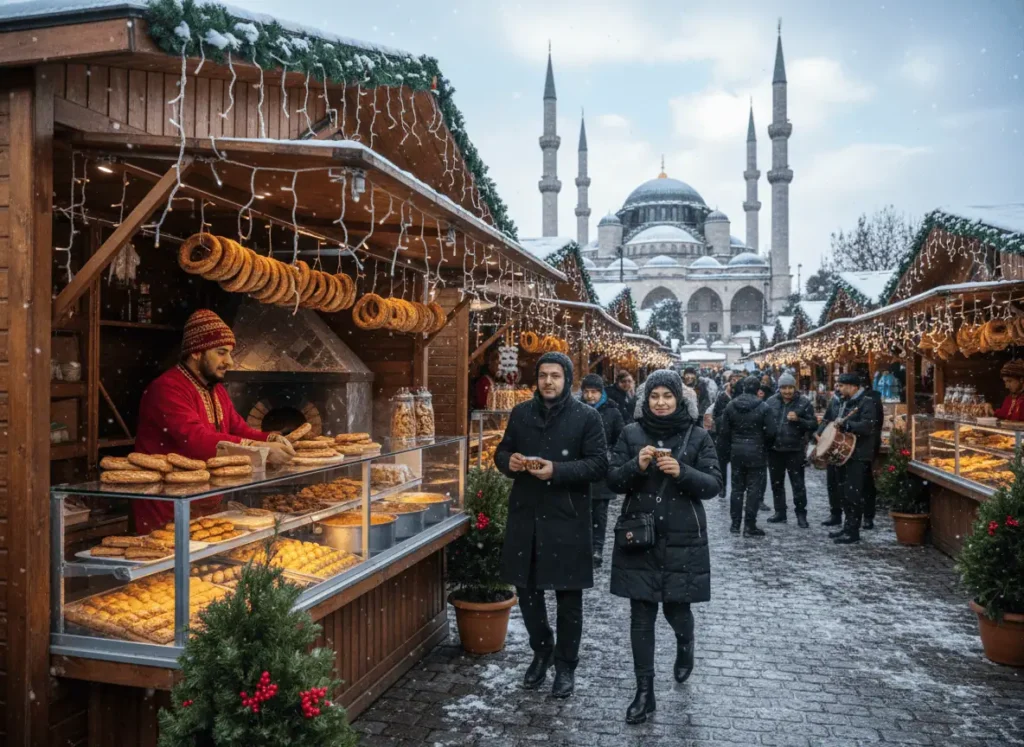
Winter changes food culture across the country. Street stalls that sell cold snacks in summer switch to hot drinks and freshly cooked foods. You will see steam rising from cups, ovens working nonstop, and locals standing around vendors just to enjoy something warm in their hands. These foods are not just about taste. They are about staying warm, feeling full, and sharing small moments during long winter evenings.
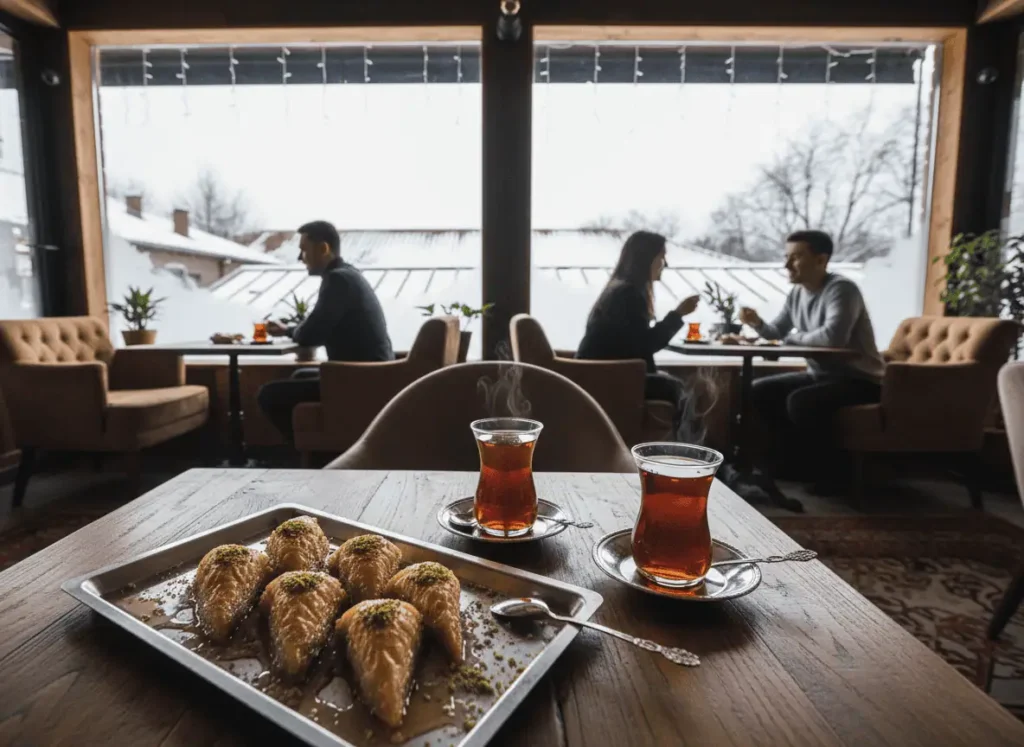
Locals rely heavily on seasonal dishes in winter. Hot drinks like salep, baked street foods like kumpir, and rich desserts like baklava become part of daily life. Soups, roasted chestnuts, and slow cooked meals are everywhere, especially after sunset.
In this guide, you will explore the most loved winter foods in Turkey and understand why they matter so much during the colder months. From popular street foods to traditional winter drinks and desserts, this article will help you know what to try, when to eat it, and why winter is one of the best times to experience Turkish food culture.
Why Winter Foods in Turkey Are Special
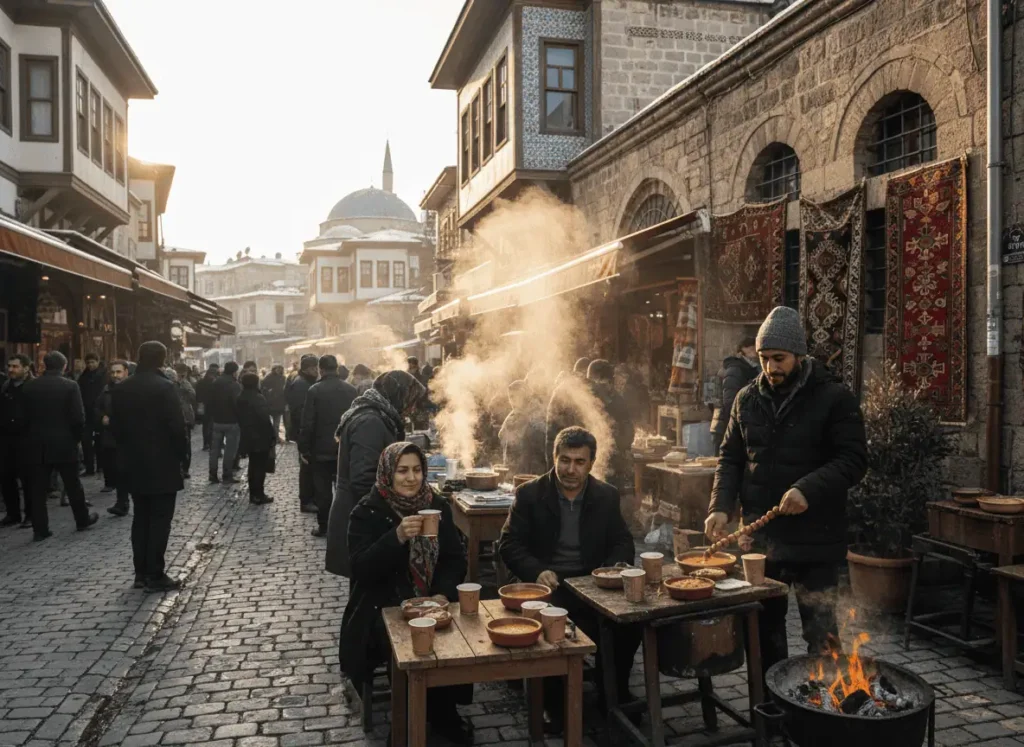
Winter brings out a side of Turkish food that feels more comforting and more meaningful. When temperatures drop, the focus shifts from light meals to dishes that are warm, filling, and made to be enjoyed slowly. Seasonal ingredients play a big role during this time. Root vegetables, legumes, grains, dairy, and nuts are used more often because they provide energy and warmth. Many recipes are built around what is naturally available in colder months, which keeps the food simple and deeply satisfying.
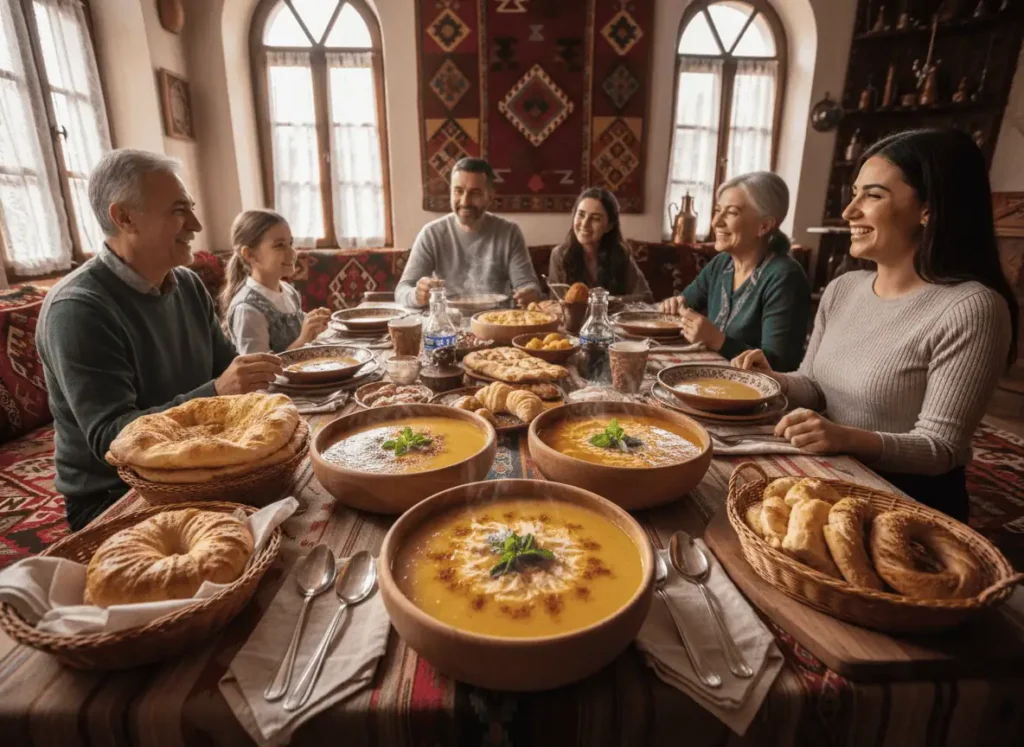
Cold weather has a strong influence on how people eat. Meals become heartier, portions feel more generous, and hot foods are preferred from morning until night. Soups appear on almost every table, breads are baked fresh, and dishes with rich sauces or melted butter feel especially comforting. This is also when winter foods in Turkey truly stand out, as they are designed to warm the body and lift the mood during short days and chilly evenings.
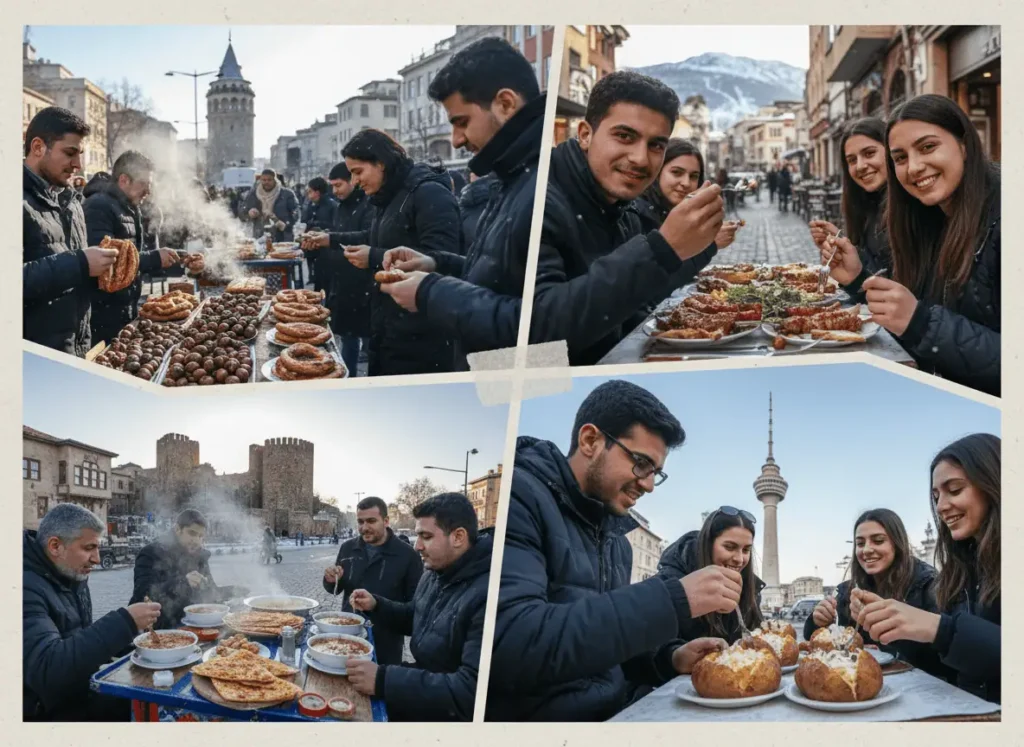
There is a clear difference between street food and home cooked meals in winter, but both are equally important. On the streets, you find hot drinks, baked potatoes, roasted chestnuts, and freshly cooked snacks meant to be eaten right away. At home, families prepare soups, stews, and slow cooked dishes that fill the house with comforting smells.
Hot drinks and baked foods carry cultural importance in winter. Sharing tea, salep, or a warm dessert becomes a social habit. Winter is the best time to explore Turkish comfort food because it shows how food connects people, seasons, and everyday life in the most natural way.
Most Popular Winter Foods in Turkey
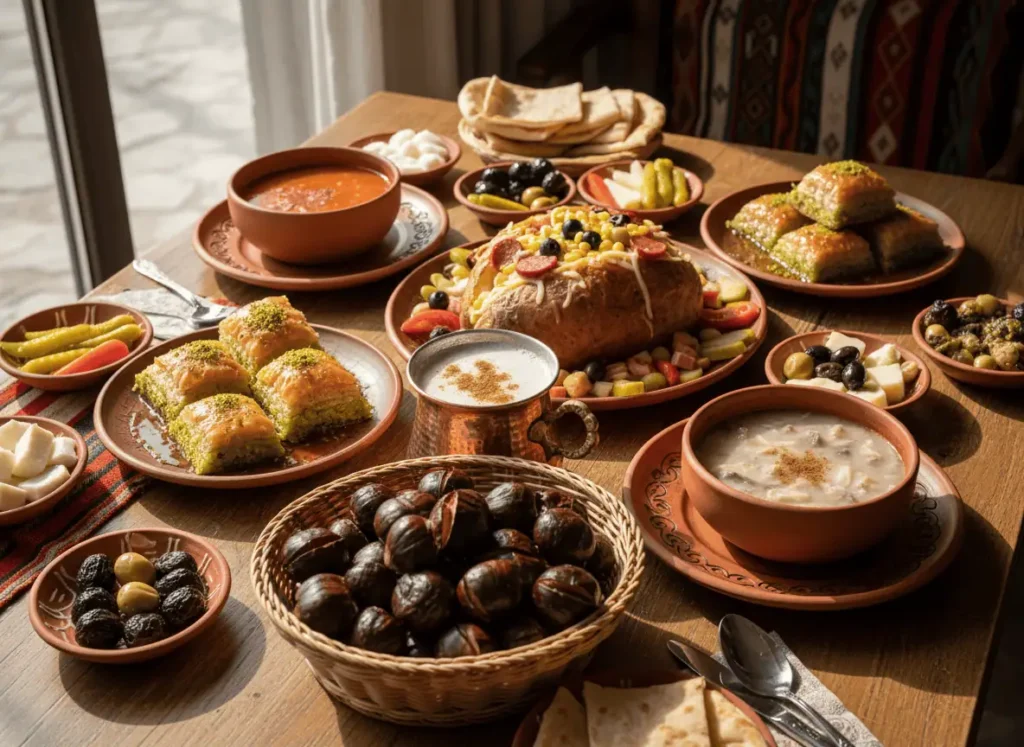
Winter food in Turkey is not limited to one type of dish. It is a rich mix of hot drinks, comforting street food, sweet desserts, and home style meals that locals turn to during cold days. Some items are quick snacks you enjoy while walking through busy streets, while others are meals meant to be shared at the table with family and friends.
You will notice that winter foods can change slightly from one region to another. Big cities like Istanbul offer everything from classic street favorites to traditional recipes from different parts of the country. In Ankara, hearty meals and soups are more common, while Bursa is known for its own local flavors and warm comfort dishes. Despite these differences, many winter foods are easy to find across Turkey, especially during the colder months.
In the next sections, you will discover the most popular winter foods, learn what they taste like, where to find them, and why they are such an important part of winter life in Turkey.
Salep – Turkey’s Most Loved Winter Drink

Salep is one drink that truly defines winter in Turkey. It is a thick, hot milk-based drink made from powdered orchid roots, mixed with milk and sugar. This ingredient gives salep its unique texture and slightly earthy flavor, something you do not find in any other drink. Because orchid roots are rare and seasonal, real salep is closely linked to winter and colder months.
You will almost never see salep in summer. It is considered a true Turkish winter drink, mainly because it is meant to warm the body. Locals turn to it on cold mornings, foggy evenings, or during long winter walks. The warmth, combined with its filling texture, makes it feel more like comfort than just a drink.
People in Turkey usually drink salep slowly. It is served very hot in small cups, often held with both hands. Locals sip it rather than drink it quickly, enjoying the warmth and the calm moment it brings. The drink is thick, smooth, and creamy, with a mild sweetness. The aroma is soft and comforting, especially when cinnamon is added on top.
Cinnamon is an important part of the salep tradition. Almost every cup comes with a light dusting of cinnamon, which adds warmth and a gentle spice to the drink. Some people mix it in, while others let it sit on top and enjoy the smell with each sip.
Tourists usually find salep at street stalls, cafés, ferry terminals, and busy walking areas in winter. Popular spots in cities like Istanbul often have vendors selling it from large metal containers. Prices in winter are reasonable, usually affordable as a daily treat rather than a luxury.
Internal link opportunity: This section can naturally link to a winter street food guide or an article about winter travel in Turkey.
Kumpir – The Ultimate Winter Street Food
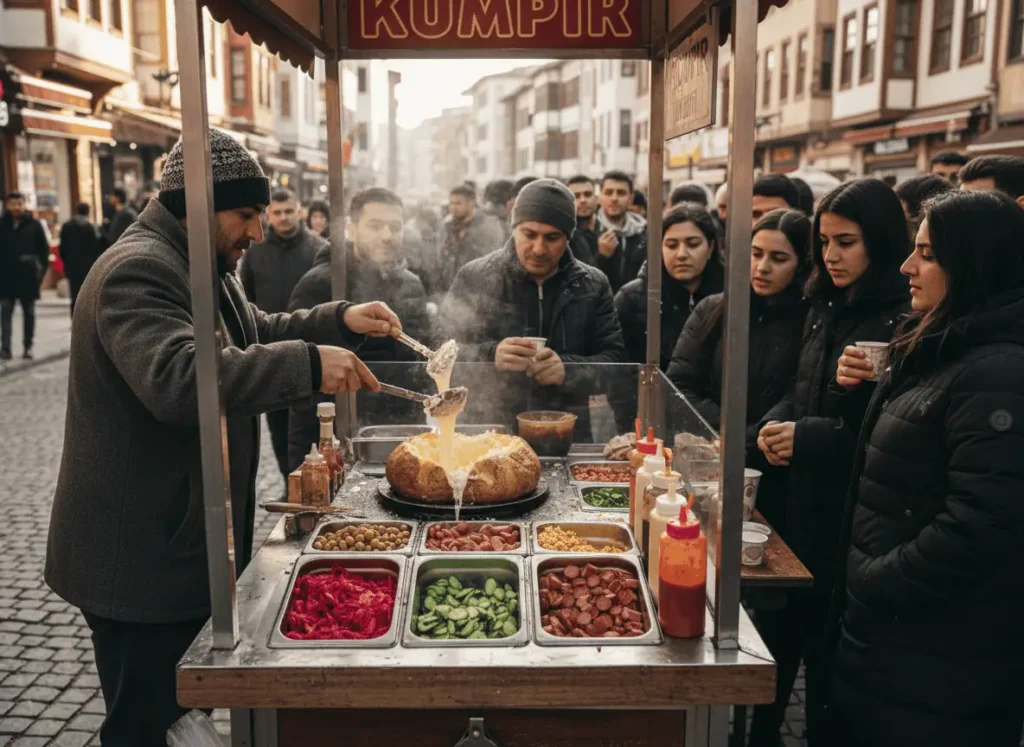
Kumpir is one of the most satisfying street foods you can eat during winter in Turkey. At its core, it is a large baked potato, cooked until the inside becomes soft and fluffy. Once opened, the potato is mixed with butter and cheese while still hot, creating a creamy base that holds all the toppings.
This dish feels perfect in cold weather for a simple reason. It is served hot, heavy, and filling. On chilly evenings, holding a warm box of kumpir while standing near a street stall feels comforting. It keeps your hands warm and your stomach full, which is exactly what people want during winter walks.
Toppings are what make kumpir fun and personal. You can choose from options like corn, olives, pickles, carrots, peas, sausage, mushrooms, salads, and different sauces. Everything is added on top of the potato, layer by layer. You do not need to know much about it beforehand. You simply point to what you like, and the vendor adds it in front of you.
One place that is especially famous for kumpir is Ortaköy. The streets there are lined with kumpir stalls, each offering dozens of toppings. In winter, this area becomes even more popular because people enjoy walking by the water and stopping for something warm and filling.
Kumpir is known for how filling it is. One potato can easily replace a full meal, especially when loaded with toppings. That is why locals love it on winter evenings, after work or while meeting friends. It is affordable, customizable, and deeply comforting, making it a true winter favorite across Turkey.
Roasted Chestnuts – A Winter Street Classic
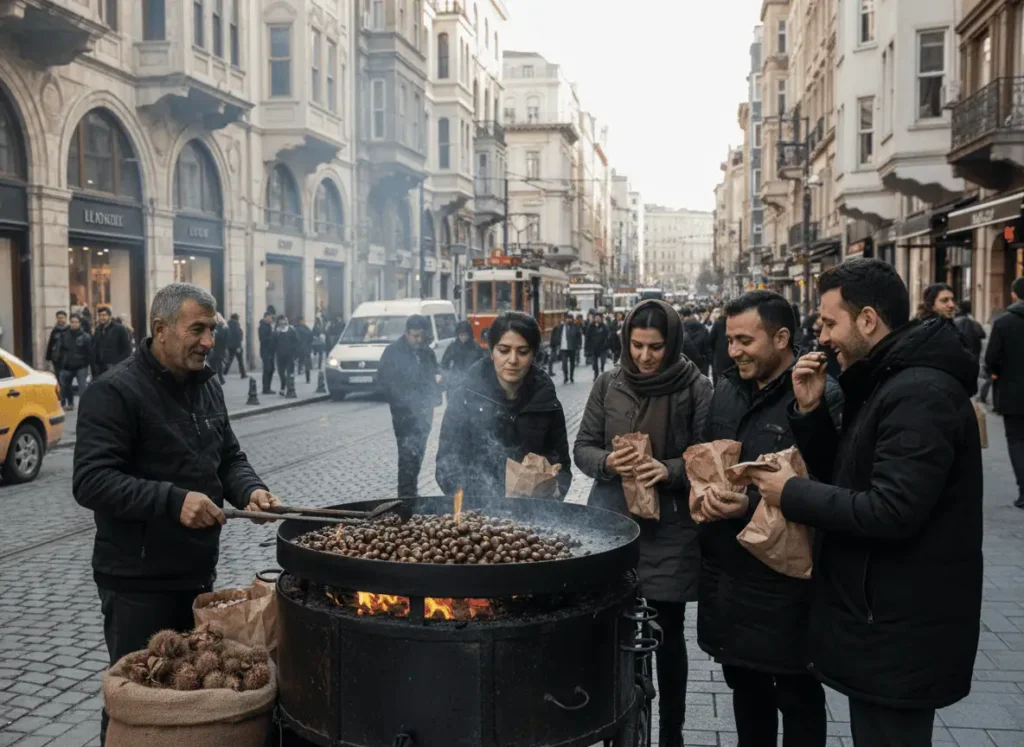
Roasted chestnuts, known locally as kestane, are one of the clearest signs that winter has arrived in Turkey. As soon as the weather cools down, chestnut carts appear on busy streets, near ferry docks, and outside shopping areas. For locals, buying a small paper bag of roasted chestnuts is a simple winter habit, almost automatic during evening walks.
Chestnuts are everywhere in winter because this is their natural season. They are easy to roast, filling, and perfect for cold weather. Vendors roast them fresh over open charcoal grills, turning them constantly until the shells crack and the inside becomes soft and warm. The process is slow and visible, which adds to the experience.
The smell is impossible to miss. The warm, nutty aroma spreads through the streets and mixes with the cold air, instantly creating a cozy feeling. For many people, this smell alone brings back winter memories of walking through the city, hands tucked into pockets, stopping briefly to warm up.
People usually eat roasted chestnuts while walking. The vendor hands them over in a small paper cone or bag, still hot from the grill. You peel them carefully, blow on them if they are too hot, and eat them one by one. It is not rushed. It is a slow, comforting snack meant to be enjoyed outdoors.
The best time to enjoy roasted chestnuts is late afternoon or early evening. This is when the air feels colder, streets feel lively, and a warm snack makes the walk feel easier and more enjoyable.
Boza – A Traditional Winter Drink You Must Try
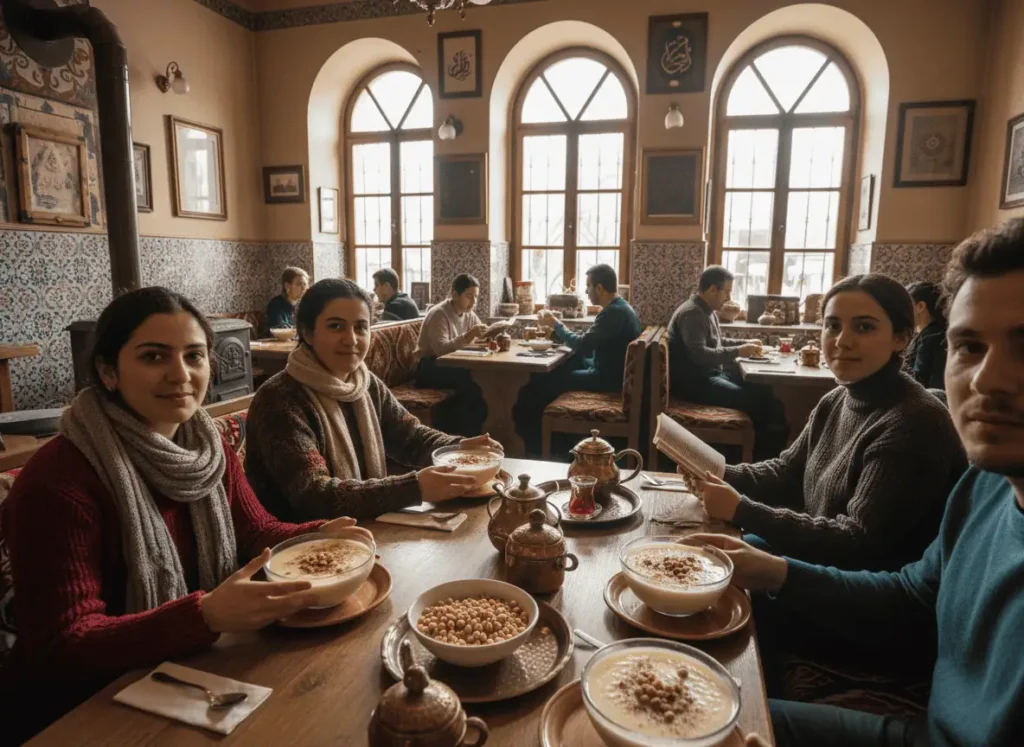
Boza is one of the oldest and most traditional winter drinks in Turkey. It is made from fermented grains, usually millet, mixed with water and sugar. The result is a thick, creamy drink with a slightly sour taste balanced by mild sweetness. Its texture is heavier than milk, almost spoonable, which makes it very filling.
What makes boza special is its long history, especially in winter. For centuries, it has been consumed during colder months because it provides energy and warmth. In the past, boza sellers would walk through neighborhoods in the evenings, calling out to announce their arrival. Even today, many people associate boza with childhood memories and winter nights at home.
Boza is seasonal mainly because of its fermentation process and its heavy nature. It is not refreshing like summer drinks. Instead, it is meant to be enjoyed slowly when the weather is cold. The drink can spoil quickly in warm temperatures, which is another reason it is closely tied to winter.
First-timers often have mixed reactions to boza. Some people love it immediately, while others need a few sips to get used to the taste. The slight sourness surprises many, especially those expecting something very sweet. Once adjusted, many start to appreciate its depth and comforting feel.
The best way to drink boza is cold but not icy, usually served in a glass or bowl. It is traditionally topped with cinnamon and roasted chickpeas, which add texture and warmth. Most locals drink it at home or buy it from well-known shops during winter evenings, making it a true seasonal experience.
Lahmacun and Pide in Winter
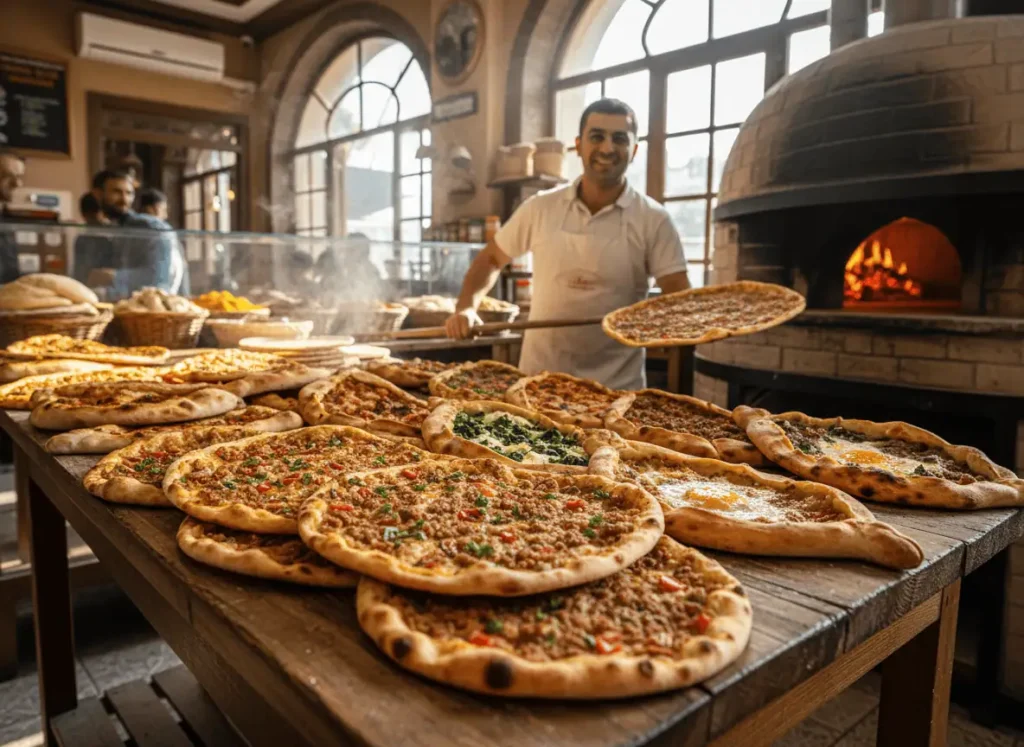
Baked foods feel especially comforting in cold weather, and in Turkey, lahmacun and pide become even more enjoyable during winter. The warmth from the oven, the smell of fresh dough, and the feeling of eating something hot straight after it is baked all make these dishes perfect for chilly days.
Lahmacun and pide may look similar at first, but they are quite different. Lahmacun is thin and flat, topped with a spiced mixture of minced meat, onions, tomatoes, and herbs. It is light, slightly crispy, and usually rolled up before eating. Pide, on the other hand, is thicker and shaped like a boat. It has a softer inside and can hold heavier toppings, making it more filling.
Winter toppings often lean toward richer flavors. Cheese becomes more popular, especially melted kaşar cheese, which adds warmth and comfort. Pide can be filled with cheese, meat, eggs, or a mix of everything, making it a strong winter meal. Lahmacun remains simpler but feels satisfying when eaten hot and fresh.
Both dishes are best eaten straight out of the oven. In winter, locals often order them to eat inside, where the warmth makes the experience even better. Cold weather also makes people slow down, so these meals are enjoyed without rushing.
Local bakeries are usually the best places to try lahmacun and pide. They bake continuously and serve them fresh. Restaurants offer more variety and seating comfort, but bakeries often deliver better flavor and value. During winter, stepping into a warm bakery for freshly baked bread and pide feels like part of daily life in Turkey.
Iskender Kebab and Other Hot Meat Dishes
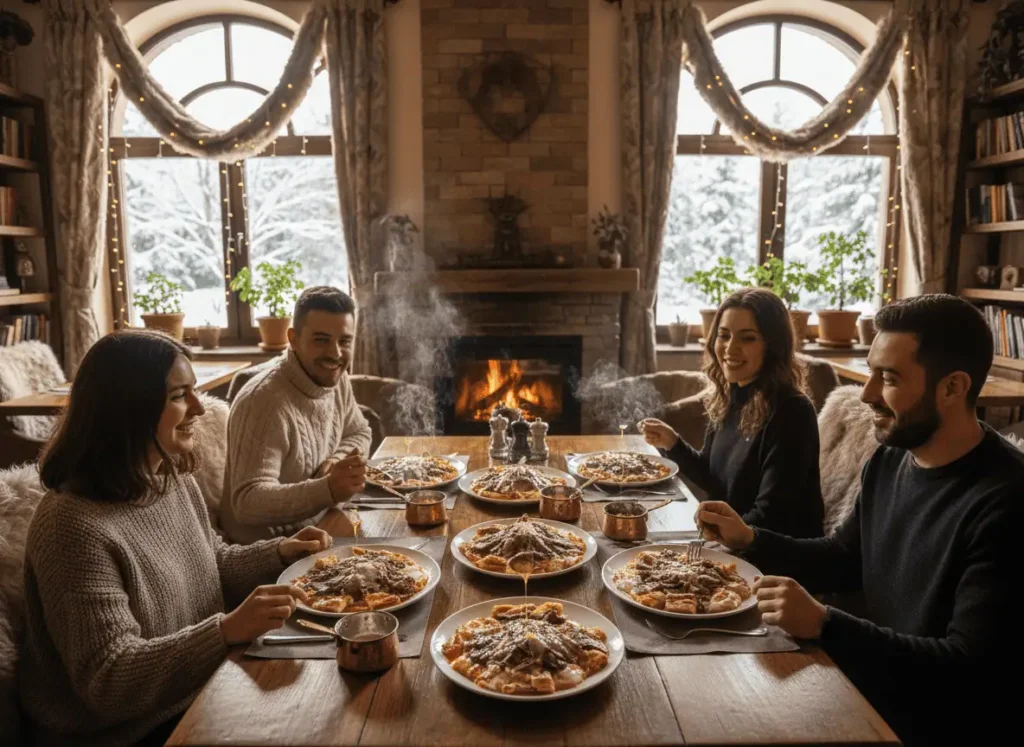
Winter in Turkey is the season for heavier, more filling meals, and meat dishes take center stage. Cold weather increases the need for energy, and people naturally turn to foods that keep them full for longer. Hot meat dishes served with bread, rice, or vegetables become a common choice, especially for lunch and dinner.
Iskender kebab is one of the most loved winter meals. Thin slices of meat are placed over warm bread, then covered with tomato sauce and finished with hot melted butter poured on top. The dish is served hot, often with yogurt on the side, which balances the richness. Every part of it is designed to feel comforting, from the warm bread to the buttery sauce soaking through.
Warm sauces and butter play a big role in winter dishes. They add richness, heat, and depth of flavor. In cold weather, people enjoy meals that feel indulgent rather than light. Butter, grilled meat, and hot sauces create that feeling of satisfaction that winter meals are known for.
Locals often enjoy meat dishes during colder months as social meals. Families gather at restaurants or at home, sitting longer at the table and eating slowly. These meals are not rushed. They are meant to warm the body and create a relaxed atmosphere.
The comfort food factor is strong with dishes like Iskender kebab. The combination of warmth, rich flavors, and familiar ingredients makes it a winter favorite. For many people in Turkey, eating hot meat dishes in winter is not just about hunger. It is about comfort, routine, and enjoying the season through food.